
High turnout, record sales mark final day of 2025 AgriFair

The 2025 AgriFair is climaxing on a high note on Sunday, June 22, with both exhibitors and patrons applauding its impact on agribusiness visibility, consumer engagement, and food system transformation. Several participants on the final day voiced strong satisfaction with the turnout, sales, and networking opportunities. Many called on Channel One TV to institutionalise the fair and consider holding it at least twice a year. “I think it has been awesome,” said Dennis Klottey, a vendor representing Aseda Premium Rice. He added: “The expectations we brought here have been met. Sales have been really good at one point, we even ran out of stock and had to go back to our depot to bring more. This has been phenomenal since we came. I think this is something you guys should keep up. It should be done twice a year and sustained over the years.” Similarly, Selorm Agudu, representative of Urban Jungle Agro Limited, described the event as an eye-opener, hailing the scale of attendance and publicity. Agriculture courses “The experience has been crazy, we didn’t expect the numbers we had. This has been a very well-organised and well-publicised event, so kudos to you,” he said. “We are selling a lot. This is something we hope will keep happening. We want to change Ghana and get people to eat what we produce. We appreciate the partnership and the publicity.” For others, the AgriFair provided more than just a commercial opportunity. It served as a strategic platform to build long-term relationships across the agricultural value chain. Ebenezer Adams, representing Recona Enterprise, noted that their focus was not primarily on sales. Agriculture courses “We are not here for sales but to link up with farmers to showcase the quality products we have. We’ve been able to connect with them. Of course, we’ve made some sales along the way, but the focus is on building these valuable networks,” he explained. Even first-time visitors found the fair rewarding. Mavis Arthur shared, “The experience is quite impressive. This is my first time coming here. I was told by a friend about what’s going on here, so I decided to pass by after church. I bought vegetables and local rice.” The 2025 AgriFair not only showcased the vast potential within Ghana’s agricultural sector but also reignited calls for sustained platforms that connect producers, processors, and consumers more effectively.
Step Into the Jungle: Urban Jungle, Your Fresh Food Plug!

Akwaaba! Welcome to Urban Jungle, where fresh meets flavor! Whether you’re a foodie, a health nut, or just someone who loves good vibes and great eats, we’ve got something special for you. Who Are We? Urban Jungle is not just your ordinary food distributor—we’re on a mission to bring the farm to your table. From the bustling streets of Accra to the quiet corners of Ghana, we deliver top-notch fresh produce straight from the soil to your plate. Imagine biting into a juicy mango, sweet and ripe, or whipping up a vibrant veggie stir-fry with the crunchiest bell peppers and carrots. That’s Urban Jungle magic! Our Baskets: Nutrition Made Easy To make things even sweeter, we’ve curated two exclusive prepackaged grocery baskets that’ll have your taste buds dancing: Nutri Basket (GHC 250):Unbox freshness, unbox nutrition. Packed with fresh goodies to keep you and your family healthy. Think of it as your ultimate health booster! Ahoto Basket (GHC 500):Bring the farm to your doorstep A bountiful selection of the freshest farm produce. Perfect for bigger families or anyone who loves to stock up. Both baskets come with a colorful mix of mangoes, carrots, kale, pineapple, tomatoes, and more! Just imagine the dishes you can create. Now Available on Tudu! Gone are the days of sweating it out at the market—Urban Jungle is officially live on the Tudu app! Getting your fresh produce has never been easier. Why Use Tudu? Hassle-free shopping from the comfort of your home. Swift delivery—no “dumsor” vibes here! Access to all your Urban Jungle favorites at your fingertips. How to Order? Download the Tudu app from your app store. Search for Urban Jungle and browse our amazing Nutri and Ahoto baskets. Place your order, sit back, and let us deliver the goodness to you. Taste the Difference Today! At Urban Jungle, we believe that fresh food is more than just fuel—it’s an experience. It’s about family dinners, Saturday waakye preps, and Sunday afternoon fufu. It’s about celebrating Ghanaian flavors in every meal. So, why wait? Join the Urban Jungle family today and let us make your meals the talk of the town! 📱 Order now on Tudu and get ready to unbox the freshest produce in Ghana!
One Planet Fellowship takes action to discover the next generation of African climate scientists in agriculture
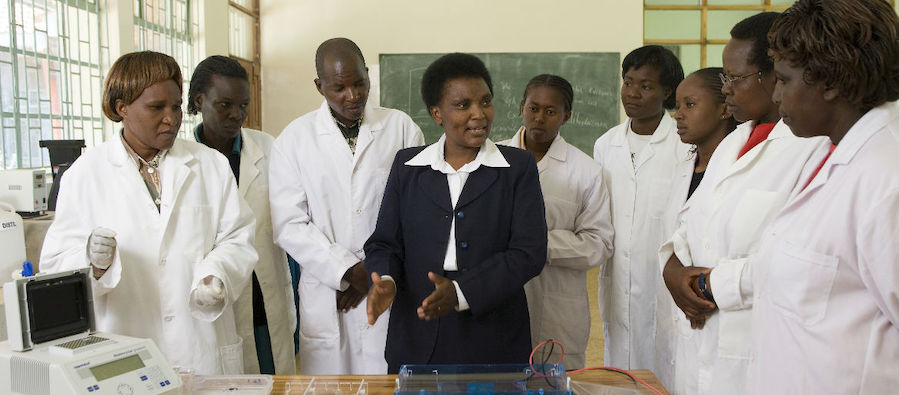
The a $20 million initiative dedicated to supporting research on climate change adaptation, is an academic mentoring scheme which aims to support Africa’s smallholder farmers in adapting to a changing climate. This year, One Planet Fellowship has collaborated with the African Women in Agricultural Research and Development (AWARD) to raise awareness and interest in the value of women engaging in research and development. Launched at the 2017 One Planet Summit in Paris, hosted by President Emmanuel Macron, the One Planet Fellowship seeks to boost climate research in Africa. The Fellowship aims to support the careers of 630 climate scientists throughout Africa and Europe over the next four years, by building leadership, strengthening research skills and establishing networks across different continents, disciplines and generations. The first 45 One Planet Laureate Candidates from 12 African countries convened in Casablanca, Morocco, for a week-long training program on integrating gender issues into their research so that they can effectively respond to the challenges, needs, and priorities of diverse populations. Dubbed the One Planet Fellowship Science week, this meeting also established research partnerships and networks for evidence-based advocacy for environmentally friendly policies and sustainable management practices. In addition, the Laureate Candidates took part in a roundtable discussion, which highlighted efforts to help smallholder farmers in Africa cope with climate change. Bringing together partners and African scientists working on climate adaptation, the event showcased the progress of the Fellowship so far and its plans for expansion. Investing in the next generation of African agricultural researchers must include learning how to place gender and social inclusion at its heart. Africa is widely accepted to be disproportionately affected by climate change. The continent contributes less than three per cent of global greenhouse gas emissions, but stands on the frontline of the economic and social consequences of climate change while receiving just five per cent of climate funding. Smallholder farmers are among the most affected, with rising temperatures, changes in rainfall and extreme weather impacting food production. In North Africa, yields from farming are expected to fall as a result of reduced rainfall and declining water availability for irrigated agricultural production, in particular along the Nile
What makes an Agritourism farm in Africa successful

I am asked many times why certain Agritourism farmers are more successful than others. There are a number of reasons, but when the farmer views Agritourism as part of his/her farming business, then success is inevitable. Agritourism on a working farm cannot be separated from the farmer. He/She is part of the Farm’s Marketing Brand. Two farmers that immediately come to mind, are Skeiding Guest Farm owned by Neels and Anne-Lize Uys; and Ezeljacht owned by the Jonkers. Skeiding Farm is near Heidelberg in the Western Cape. Guests are involved as far as possible in the workings of the 1200 hectare family farm, which include the following animals and crops: Ostriches, Merino sheep, Nguni cattle, Canola, Wheat, Barley and Peas. In other words, a variety of activities. In their own words “Neels is the farmer, socialiser, “braaier” and farm tour guide, and Anne-Lize is the baker, jam maker and money taker”. Guests get up early to join Neels in his daily farming activities, then come back to have a farm breakfast cooked by Anne-Lize. Neels grew up in that area, so he is a walking encyclopaedia of local information. Most of his visitors are from Europe, who want to learn about Ostriches. There are 15 different activities on the farm, apart from the farm tours and Anne-Lize has coordinated several itineraries for day trips so guests stay longer in their farm cottages. The farm is easy to find with the GPS coordinates and is well sign posted. The Jonkers own several farms in the Southern Cape. They have 7 different guest houses on 3 different farms that neighbour one another, with 80 beds in total. All are working farms, with ostriches, sheep etc. The Jonkers are not only farmers, but highly successful entrepreneurs as well. They are superb hosts and guests are frequently invited into their farm house to meet their family and enjoy a home cooked meal. They understand very well that people relate to people, as well as the value of storytelling/history of the farm itself.
Does Farmsize really matter in Africa
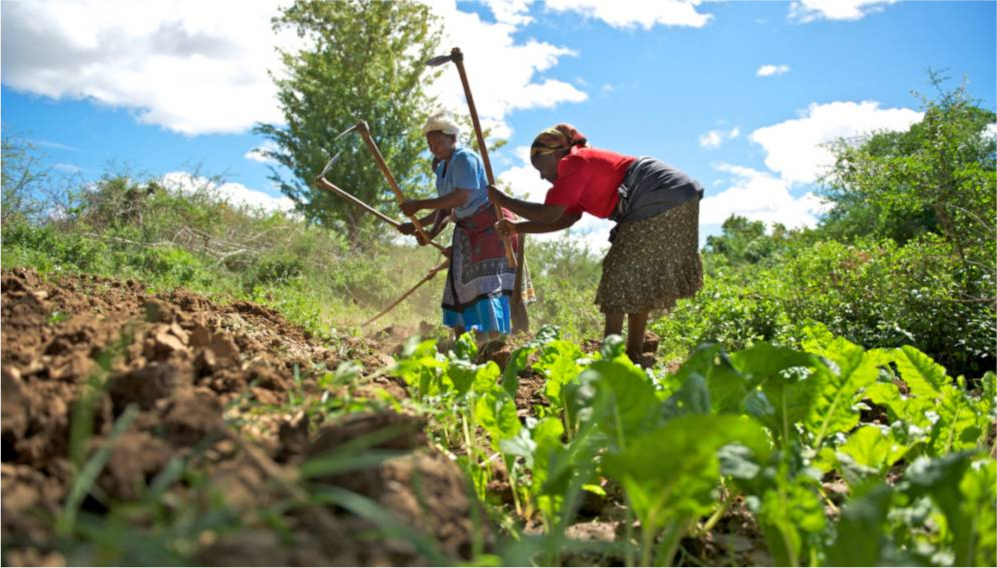
Among the issues exercising the minds of those concerned with the future welfare of the African continent and its people is the issue of farm size. Many debate if land should be in the hands of larger scale commercial farmers or a multitude of smallholders. But, the hundreds of millions of small-scale farmers of Japan, China, and elsewhere in Asia show us that farm size is not the key determinant of productivity. These farmers obtain levels of productivity per unit area of land which are equal to or greater than those achieved by large-scale farmers anywhere in the world. The key to their success is not the size of their land holding but their access to intensifying farm inputs and particularly to inorganic fertiliser. This in its turn is largely dependent upon the availability of subsidies. In the case of East Asia, subsidies are of a similar level to those provided to European farmers. The comparatively low yields of staple food crops achieved on small-scale farms in Sub-Saharan Africa are not a direct result of the size of their farms but rather that they only have access to 5% of the level of fertiliser per unit area of land as compared to their East Asian counterparts. The lack of widespread programmes to assist small-scale African farmers to gain access to adequate fertiliser and good seeds is largely due to the absence of a vibrant non-agricultural sector in many countries, which would provide the resources to help farmers obtain the inputs they need. If a nation is unable to afford access to adequate plant nutrients to meet the needs of its whole crop area, then it matters little as to whether that area is divided into large sections or small, the hungry crops will provide equally low levels of national production. The argument in favour of dispossessing smallholders of their land and creating larger units in Africa has often been based on the performance of small enclaves of commercial farmers in the midst of a large body of smallholders. Too little attention is given to the fact that the subsidised benefits and access to niche markets, which a small number enjoy, could not be extended to the whole area of the country involved. On another continent, the example of Brazil is often cited to exemplify the superiority of large farms over small. There tends to be less focus on the $100 billion of subsidised credit, which is an essential feature of that success. For the time being, however, the crucial issue for increasing farm productivity in Africa is how to enable farmers to obtain enough fertiliser to replace the nutrients being lost every day, and how to give them access to the seeds of crops which can make the best use of those nutrients. Unpopular as it may be for some people, the evidence from the rest of the world is that this means subsidies in one form or another. Two recent examples of where subsidies on farm inputs have made a significant impact on both productivity and welfare are provided by Ghana and Malawi. Ghana is considered the first African nation to have halved the number of people living in extreme poverty. This is in part attributed to the greatly increased fertiliser use by small farmers in recent years stimulated by a 49% subsidy and the establishment of 4,000 fertiliser retail outlets. In Malawi the under-five child death rate has dropped from 222 to 92 helped by the major growth in staple food production. Such growth was the result of the large fertiliser and seed subsidy programme of the past seven years which was concentrated entirely on small-scale farmers. Large-scale or small is not really a crucial issue for the future of African agriculture but rather access by farmers to intensifying inputs, particularly fertiliser, irrespective of the size of their farms.